

1
/
of
8
OLYCOM
8 Port CCTV PoE Switch Single Gigabit SFP/Ethernet 240W NEMA-TS2 DIN Mounted
8 Port CCTV PoE Switch Single Gigabit SFP/Ethernet 240W NEMA-TS2 DIN Mounted
Regular price
$89.99 USD
Regular price
$78.00 USD
Sale price
$89.99 USD
Unit price
/
per
Couldn't load pickup availability
Introduction
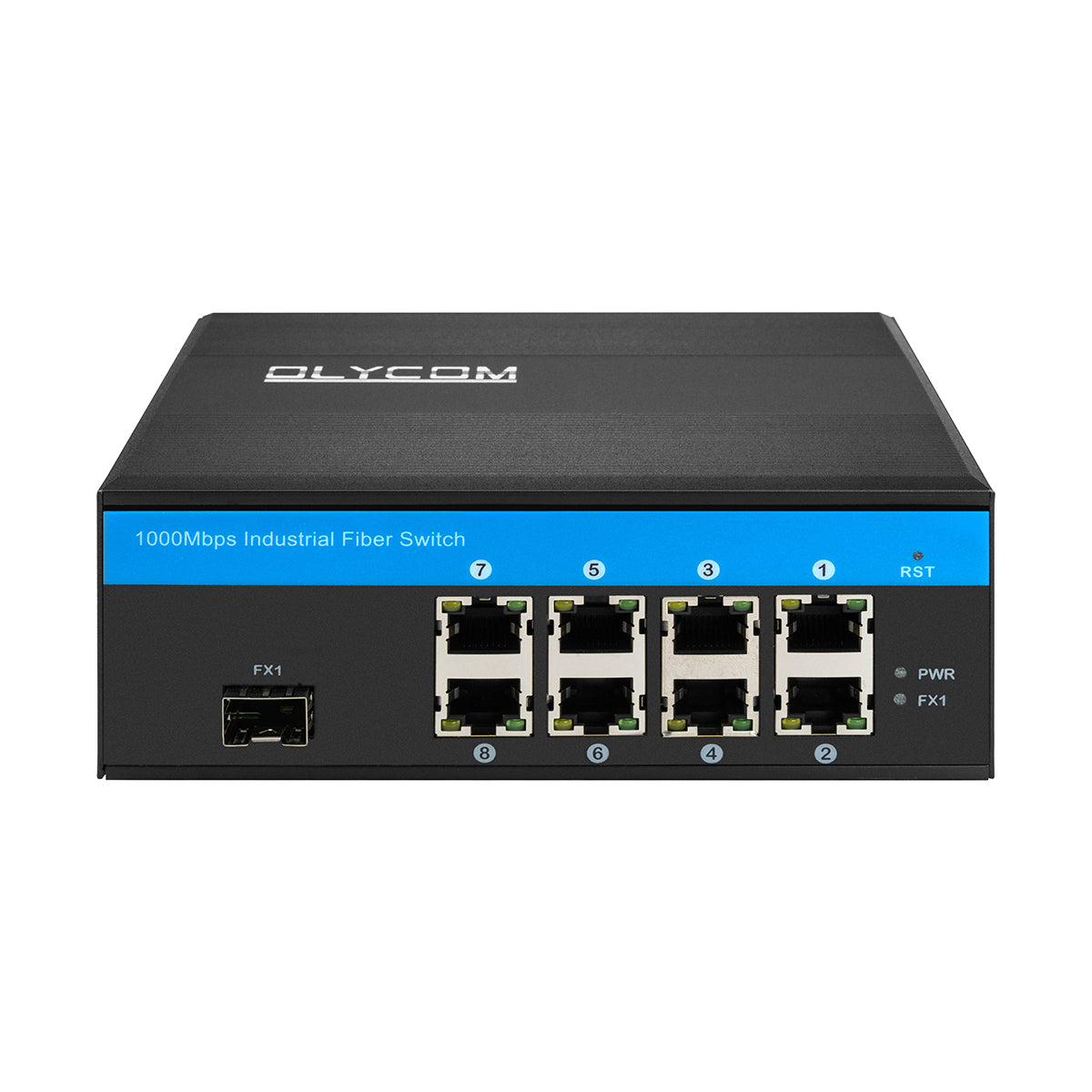
- The IM-FP188GE answers a specific infrastructure question: what is the leanest hardware path from a single fiber uplink to eight powered copper endpoints?
- With 1 × Gigabit SFP and 8 × IEEE 802.3af/at PoE RJ45 ports on a 40Gbps non-blocking fabric, it maximizes PoE access density per fiber port — eight cameras, eight APs, or any combination of PoE endpoints, all connected and powered from one fiber strand and one DIN-rail slot, with no configuration and no management overhead.
- The single-SFP architecture is a deliberate cost and simplicity choice.
- Fiber infrastructure is expensive to install; every additional fiber run to a field node adds civil works, trenching, and termination labor. In surveillance rings, transit backbone chains, and campus distribution networks where the fiber path arrives at a node from only one direction — a star topology endpoint, a chain terminus, or a branch off a main ring — the IM-FP188GE uses that single fiber connection to its maximum effect: eight PoE outputs, all active simultaneously, from the smallest fiber port count possible.
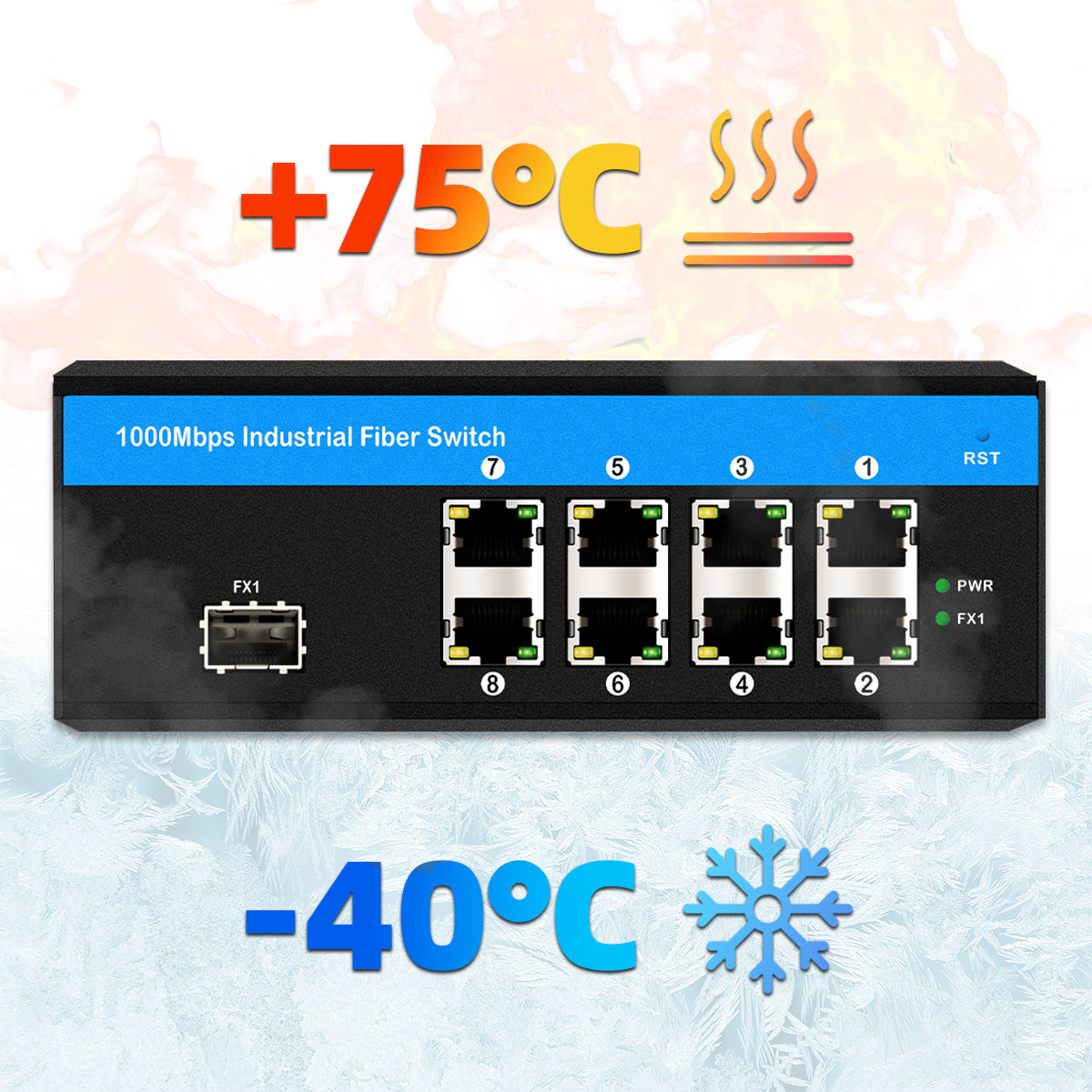
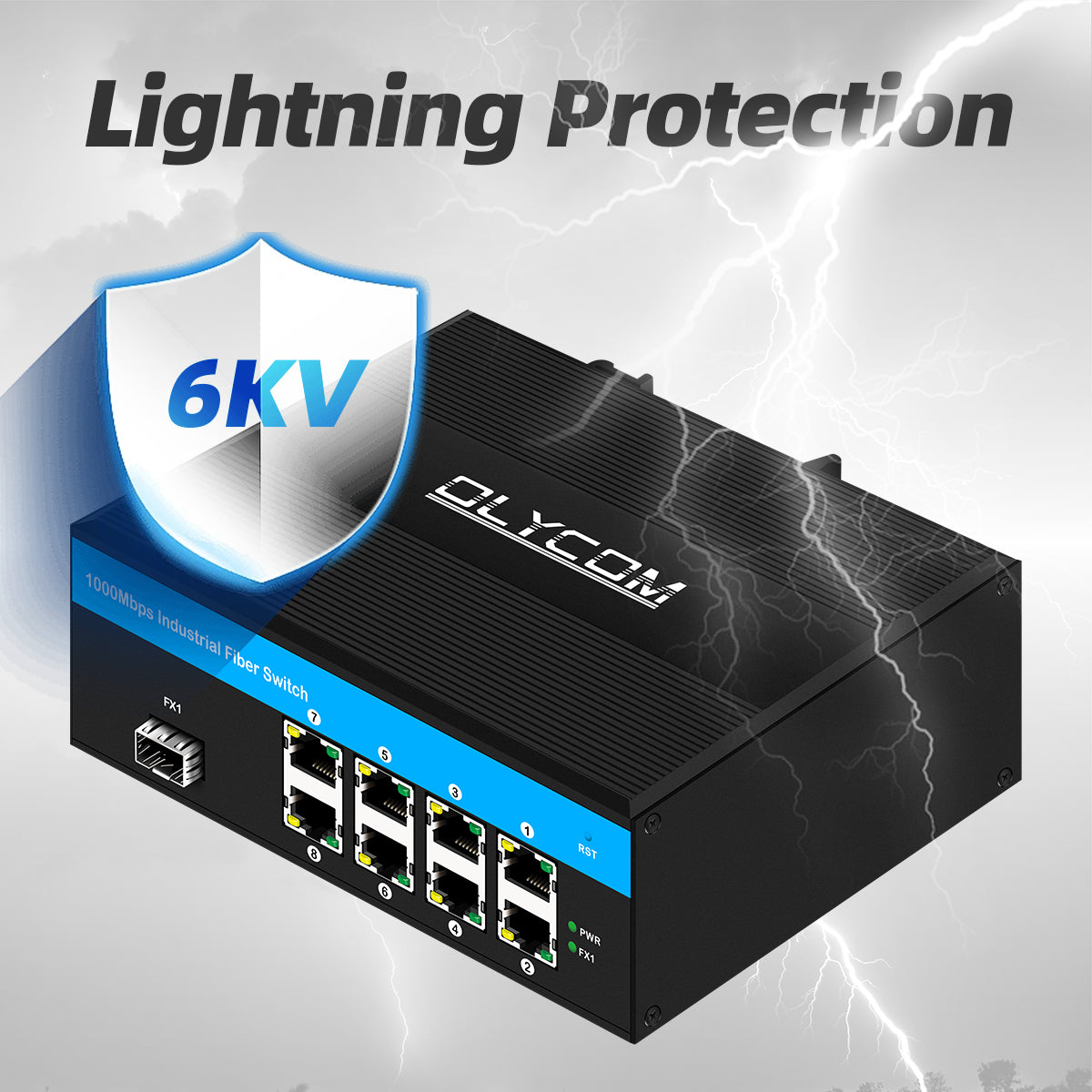
- Add 6KV surge protection on every copper port, the full IEC 61000-4 Level 3 EMC suite, NEMA-TS2 and EN 50121-4 certifications, and a -40°C to +75°C rating, and the result is the most cost-efficient hardened PoE fiber access point available for single-uplink field locations.
Key Features
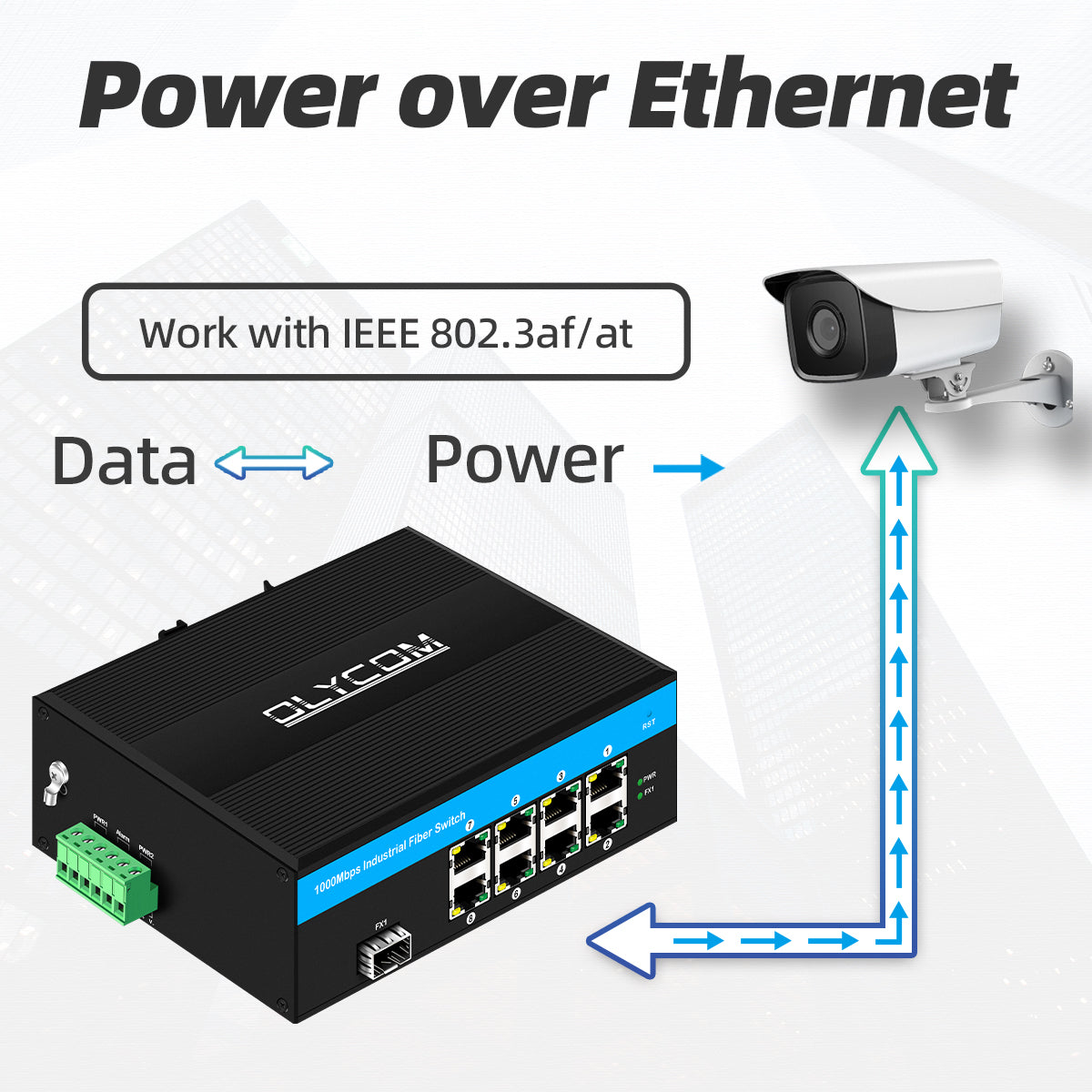
- 1 × 1000M SFP + 8 × 10/100/1000M PoE RJ45 — Maximum PoE Density per Fiber Port — Single fiber uplink drives eight independent full-Gigabit PoE access ports; SM (20–120km) and MM (2km) SFP modules supported; BiDi single-fiber compatible; every copper port delivers IEEE 802.3af (15.4W) or 802.3at (30W) with automatic PD classification — no manual configuration per port
- 40Gbps Non-Blocking Switching Fabric — The same switching capacity as the four-SFP IM-FP488GE, concentrated behind a single fiber uplink; sustains wire-speed Gigabit forwarding across all nine ports simultaneously under full PoE device load without congestion
- Lowest Fiber Infrastructure Cost Per PoE Port — One fiber strand, one SFP module, eight PoE outputs: the IM-FP188GE delivers the lowest fiber infrastructure investment per powered endpoint among all IM-FP series switches — the right optimization for deployments where fiber runs are the dominant installation cost
- Unmanaged — Standardized Field Deployment at Scale — No configuration state per unit; every IM-FP188GE on a network behaves identically from the moment it powers up; field replacement requires only cabling — no login credentials, no VLAN restoration, no firmware check; critical for large distributed networks where hundreds of nodes must be commissioned and maintained by field technicians rather than network engineers
- 6KV Ethernet Surge Protection — All eight RJ45 ports individually protected against high-voltage transients; essential for outdoor cable runs between the switch and pole-mounted or building-exterior endpoints
- IEC 61000-4 Full Level 3 EMC Immunity — ESD / Radiated Immunity / EFT / Surge / Conducted Immunity all at Level 3; CE-EMC / CE LVD EN60950 / FCC Class A certified
- NEMA-TS2 Traffic Control Certified — Qualifies directly for roadside traffic infrastructure specifications without additional testing or waivers
- EN 50121-4 Railway Certified — Validated for trackside and station EMC requirements in railway signaling and communications environments
- IEC 60068 Mechanical Certifications — Vibration (IEC 60068-2-6) / Freefall (IEC 60068-2-32) / Shock (IEC 60068-2-27)
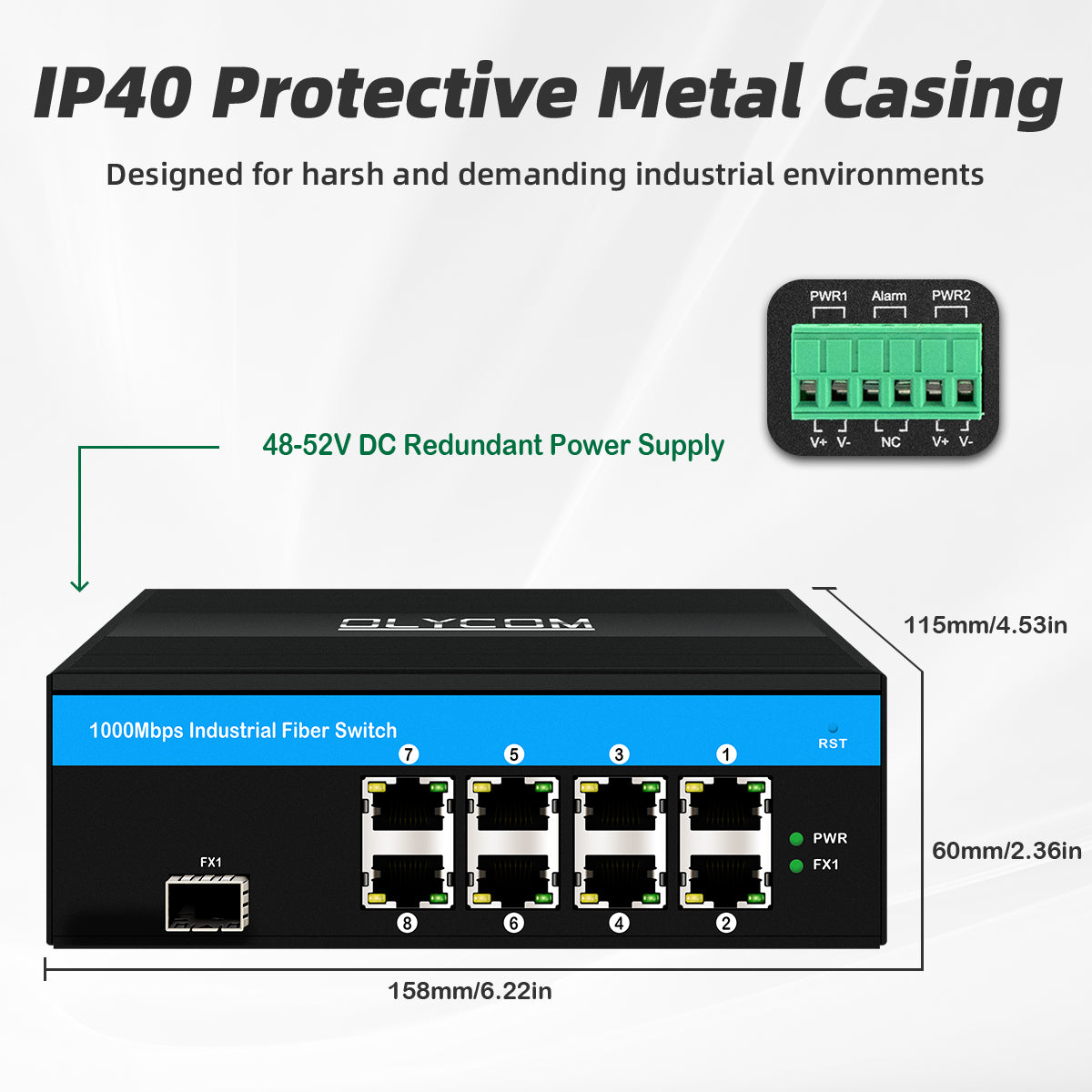
- DC 48V Input (max 52V) / Reverse-Connection Protection — Direct 48V DC plant integration; hardware polarity protection on the input terminal
- Store-and-Forward / Auto MDI/MDIX / IEEE 802.3x Flow Control
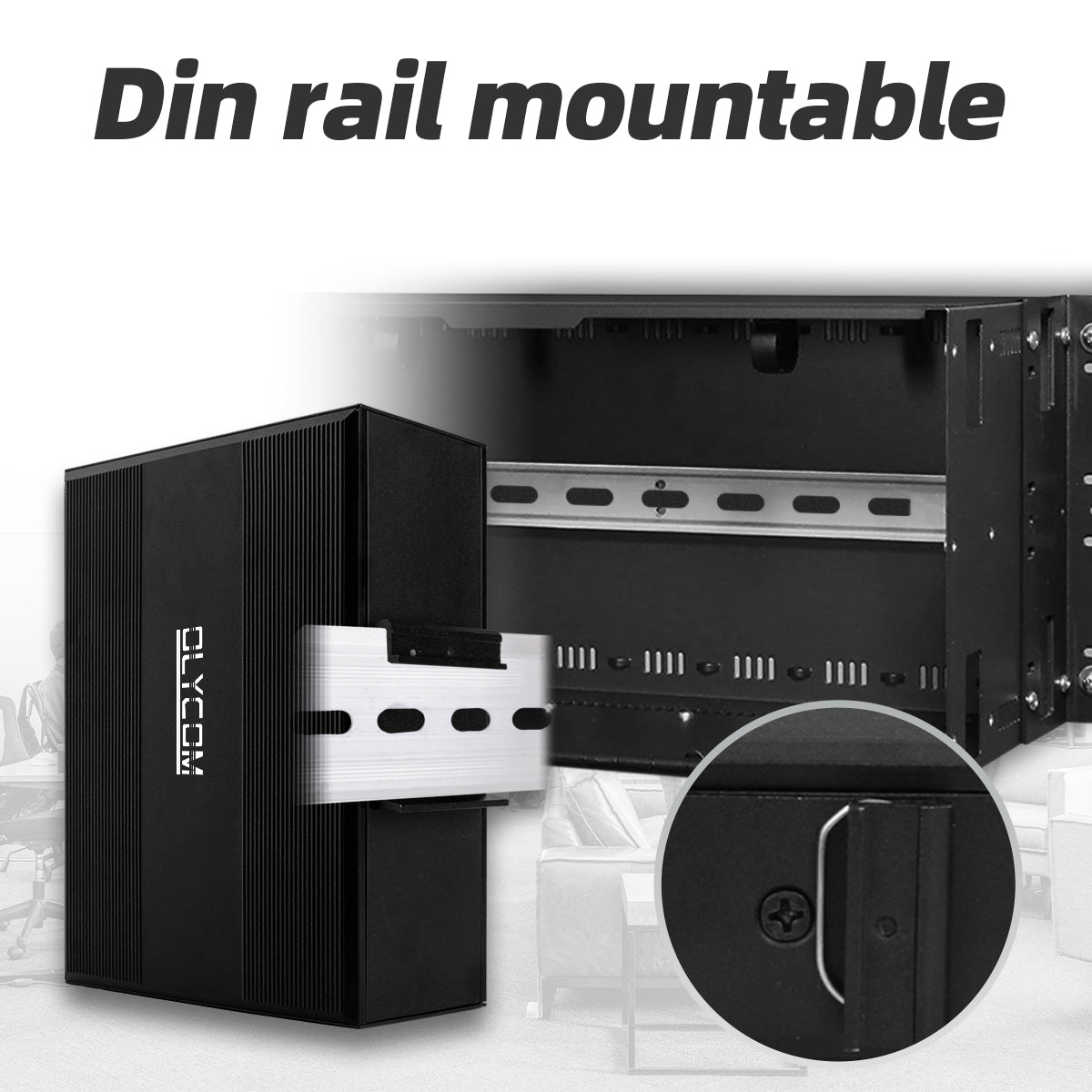
- IP40 / DIN-Rail / 158 × 114.8 × 60mm / 3-Year Warranty
Applications
- Fiber Star Endpoint Nodes — Full Eight-Camera Clusters — In fiber star topologies where individual runs extend from a central aggregation point to each cluster location, the terminal node at each star endpoint receives one fiber and must connect a full cluster of devices. The IM-FP188GE makes that single fiber feed serve eight cameras simultaneously — the maximum PoE device count available from one fiber drop — without a second fiber run, a managed switch, or any on-site configuration. For large surveillance deployments with dozens of cluster locations, the single-SFP architecture reduces fiber infrastructure cost at every node while the unmanaged operation removes commissioning complexity entirely
- Transit Corridor & Platform End-of-Line Nodes — Metro and railway station platforms deploy IP cameras, passenger counters, emergency call points, and display panels at platform ends and corridor terminations where the fiber backbone arrives as a single branch or spur rather than a through-ring. The IM-FP188GE terminates the fiber spur and powers all eight local devices from one DIN-rail unit in the platform equipment cabinet, with EN 50121-4 railway certification meeting the station electrical environment standard and unmanaged operation removing the configuration requirement from station maintenance workflows
- Highway Monitoring Single-Direction Fiber Branches — Along highway corridors, fiber is often laid in one direction from a central point to serve monitoring locations at intervals. At each interval node, the IM-FP188GE branches off the main fiber run, powers eight roadside devices — speed cameras, weather sensors, communications modems, emergency call boxes — and requires no configuration from the road maintenance crews who install and service roadside equipment cabinets. NEMA-TS2 certification ensures direct procurement qualification for highway infrastructure contracts
- Building Floor Distribution from Riser Fiber — In multi-floor commercial buildings, hospitals, and government facilities where a fiber riser delivers a single strand to each floor IDF, the IM-FP188GE terminates the floor drop and distributes PoE connectivity to up to eight floor devices — corridor cameras, access control readers, wireless APs, IP intercoms — from a compact DIN-rail unit in the floor wiring cabinet. The single-SFP design matches the single-strand riser architecture; no additional fiber infrastructure is needed at the floor level
- Industrial Zone Single-Feed PoE Distribution — Factory production zones and warehouse areas connected by a single fiber feed from the plant backbone use the IM-FP188GE to power and connect the full complement of zone devices — machine vision cameras, RFID readers, barcode scanners, zone wireless APs — from one fiber connection at the zone panel. IEC 61000-4 Level 3 immunity handles the motor drives and switching equipment generating interference throughout the production environment; unmanaged operation means zone panel maintenance requires no network expertise
- Campus Outdoor AP Clusters from Single Fiber Drops — University campuses, sports facilities, and large outdoor venues run fiber to outdoor equipment cabinets serving clusters of wireless APs. Where each cabinet connects to the campus network through a single fiber drop, the IM-FP188GE powers and connects eight 802.3at APs simultaneously — covering the RF density requirement of a large outdoor area from one fiber connection and one hardware unit, without the separate PoE switch and media converter that a two-device architecture would require
- Remote Monitoring Stations with Single Fiber Backhaul — Pipeline pump stations, water treatment outposts, and remote energy facilities connected by a single long-haul fiber link use the IM-FP188GE to distribute connectivity and PoE power to all local monitoring and control devices from that one fiber connection. The -40°C cold-start capability and wide-temperature operation handle remote site climate conditions; the unmanaged architecture means the device operates without any network management infrastructure at the remote site; and the single-SFP design minimizes the fiber termination hardware required at locations where installation access is infrequent and costly
Share